
Which turkey is right for you?
whole vs spatchcocked vs broken down

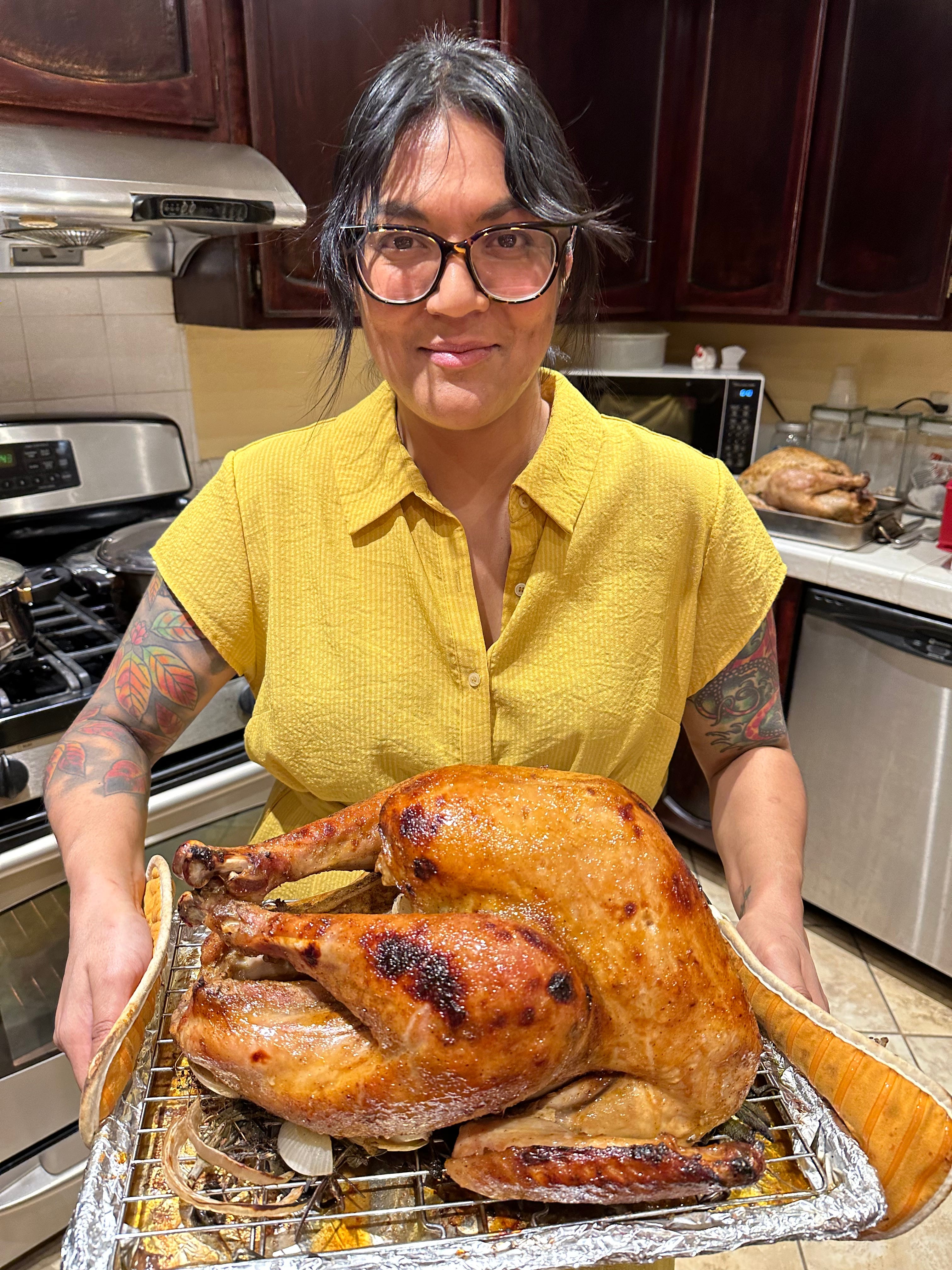
I’ve developed several turkey recipes over the years, and every time, I declare that it’s the greatest of all time. I’m not lying to you all. At that time, they were the perfect turkey for me. The fact is, you can’t have it all with any one method, so it’s about understanding the pros and cons of each recipe so you can pick the one that suits your preferences and current lifestyle.
Here’s a quick breakdown with links to my previous turkey content. Or, if you’re not feeling turkey at all this year, check out the fried chicken feast I developed for NYT Cooking!
PS: Regardless of the turkey, you gotta dry brine. Watch more about it here and here. And note that if you’re starting with a frozen turkey, it can take upwards of a week to defrost in the fridge or 24 hours under cool running water. Remember to consider defrosting and brining time when planning your prep.
Low & Slow Whole Roast Turkey
Whole turkeys get a bad wrap because we’ve all had dry ones. The problem lies not with the method but with the execution. With a dry brine, low temperature to ensure even cooking, and a thermometer to avoid overcooking, it can be the best turkey you've ever had (and is my favorite method until further notice).
Pros:
hands-off cooking
requires no butchering
very moist with tender dark meat thanks to the long cook time, which allows all the connective tissue to break down
you can present a whole bird on the table
easy to roast more than one bird for large parties
Cons:
takes a long time (3 to 5 hours depending on size), hogging the oven all day
the skin isn’t as crisp
new whole roasted turkey video
Hot & Fast Spatchcocked Roast Turkey
A spatchcocked turkey has the backbone removed so you can splay it open. This exposes the legs to more heat, allowing the bird to cook evenly without going low and slow. It’s typically roasted at a moderate to high heat, even up to 450F in some recipes.
Now, I know what you’re thinking (because I’ve been asked dozens of times): Can I slow roast a spatchcocked bird? Sure, but there’s no point since both techniques do the same thing—allow for even cooking. And you miss out on benefits from either technique (no crispy skin from high heat + spatchcock, no whole bird to present, etc.).
Pros:
It cooks fast (1 to 2 hours depending on size), so the oven is available for other items
the skin is well-rendered and browned
easy to roast more than one bird for large parties
the breast meat is moist and tender
Cons:
requires some simple butchering, but you can ask your butcher to spatchcock for you
the dark meat isn’t as tender as with the low and slow method because there isn’t as much time for all the connective tissue to break down
Broken Down & Butter Basted Roast Turkey
This was my go-to turkey for many years. It’s the most chef-y of the three recipes, requiring you to butcher the turkey into legs, crown (bone-on breast), and wings. After dry brining, the pieces are first seared in a neutral oil until browned all over, then butter-basted with herbs and garlic before roasting in the oven. This advanced technique is great for showing off, but it’s as difficult as it is delicious.
Pros:
best browning and crispiest skin
dark and white meat are cooked perfectly
most butter flavor from basting
Cons:
requires significant butchering
lots of hands-on time searing and butter basting on the stovetop
high-quality equipment is required: sharp knife for butchering, heavyweight stainless steel pan, or well-seasoned cast iron for even searing
too labor-intensive for multiple birds
I hope this helps you decide the best turkey for you this year. If you have any questions, let me know in the comments below and I’ll answer them all in a follow up post!
Spatchcocked turkey 4ever
Do you recommend those butterball turkeys that are already brined? Would I still need to dry brine it?